Image 1 of 1: ‘Blank plot, before adding any mapping aesthetics to ggplot().’
Figure 2
Image 1 of 1: ‘Plotting area with axes for a scatter plot of life expectancy vs GDP, with no data points visible.’
Figure 3
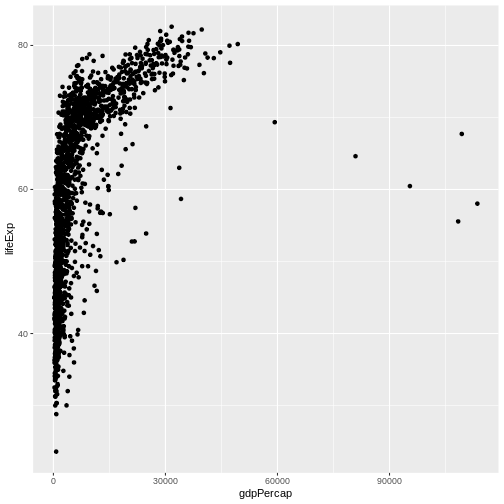
Image 1 of 1: ‘Scatter plot of life expectancy vs GDP per capita, now showing the data points.’
Figure 4
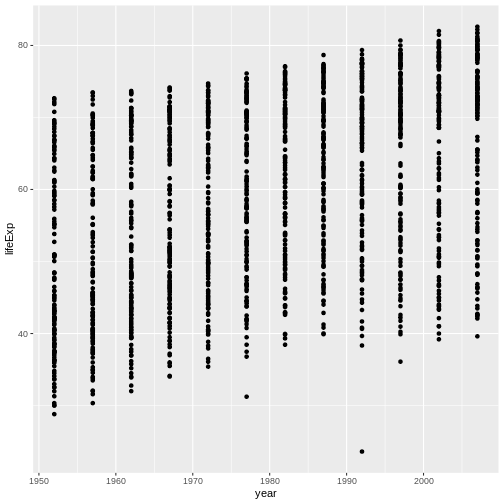
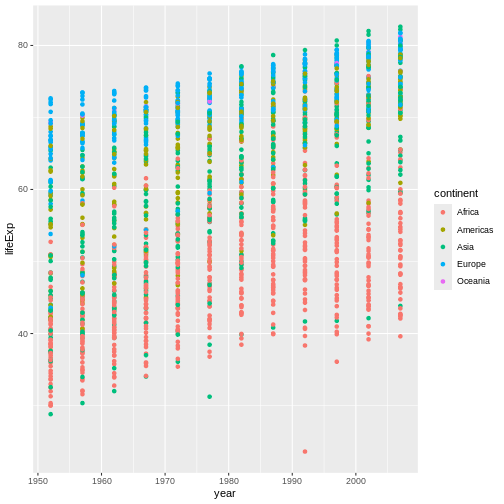
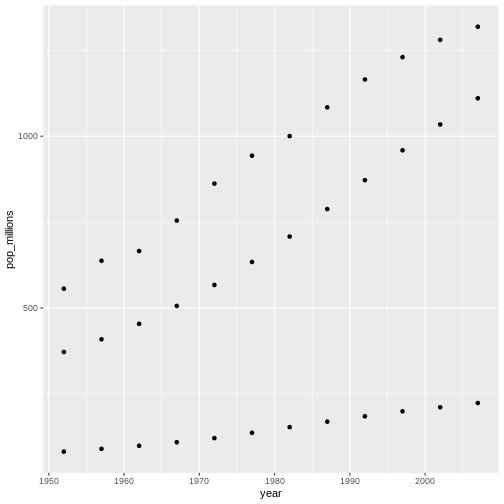
Image 1 of 1: ‘Binned scatterplot of life expectancy versus year showing how life expectancy has increased over time’
Binned scatterplot of life expectancy versus year showing how life
expectancy has increased over time
Figure 5
Image 1 of 1: ‘Binned scatterplot of life expectancy vs year with color-coded continents showing value of 'aes' function’
Binned scatterplot of life expectancy vs year with color-coded
continents showing value of ‘aes’ function
Figure 6
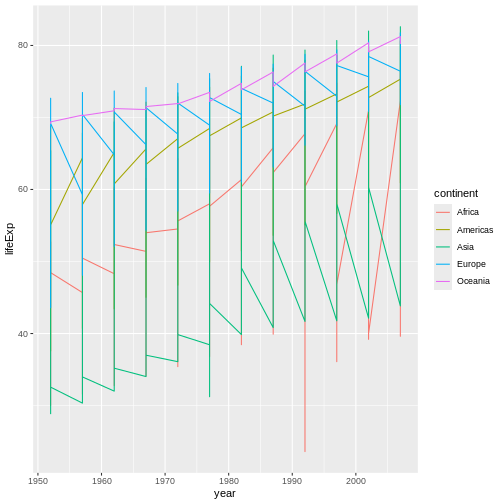
Image 1 of 1: ‘Line plot of life expectancy over time, with one line per continent and lines colored by continent.’
Figure 7
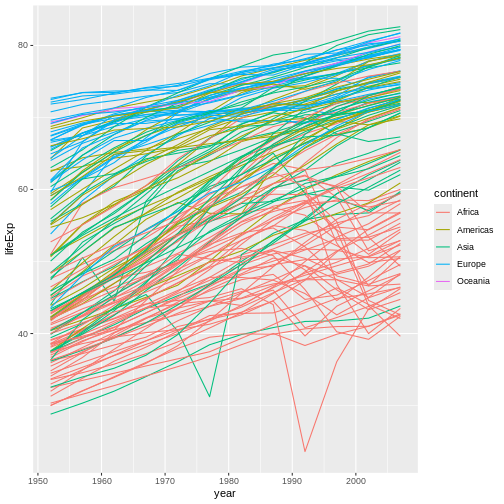
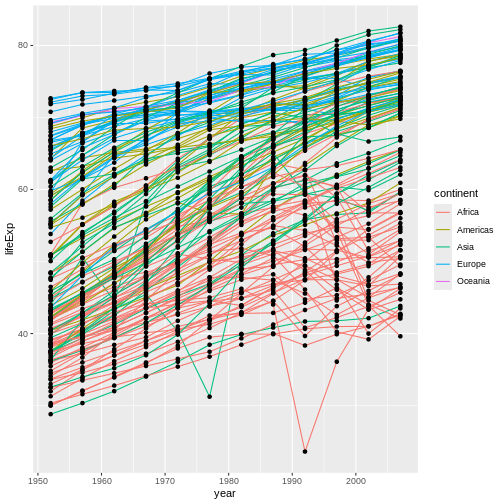
Image 1 of 1: ‘Line plot of life expectancy over time, with one line per country and lines colored by continent.’
Figure 8
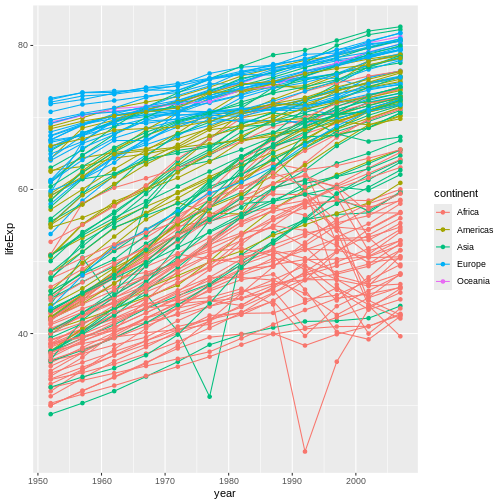
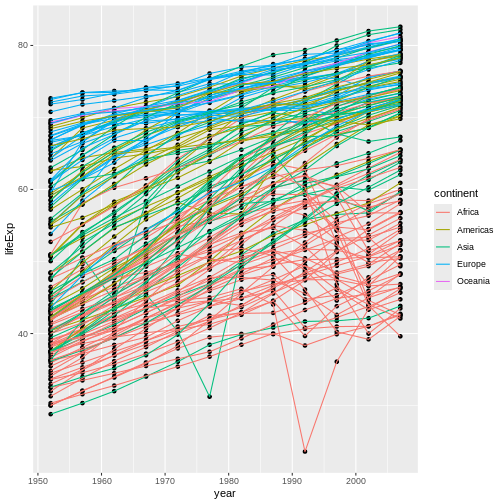
Image 1 of 1: ‘Line plot of life expectancy over time, with one line and data points per country, colored by continent.’
Figure 9
Image 1 of 1: ‘Line plot of life expectancy over time, with one line and data points per country; lines are colored by continent.’
Figure 10
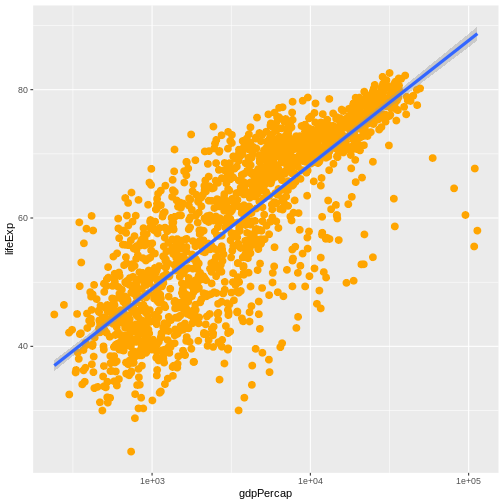
Image 1 of 1: ‘Scatter plot of life expectancy vs GDP per capita with a trend line summarising the relationship between variables. The plot illustrates the possibilities for styling visualisations in ggplot2 with data points enlarged, coloured orange, and displayed without transparency.’
Figure 11
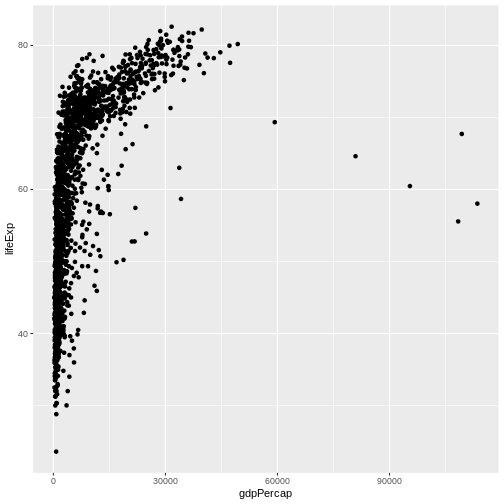
Image 1 of 1: ‘Scatter plot of life expectancy versus GDP per capita, with points clustered at lower GDP per capita and higher life expectancy.’
Figure 12
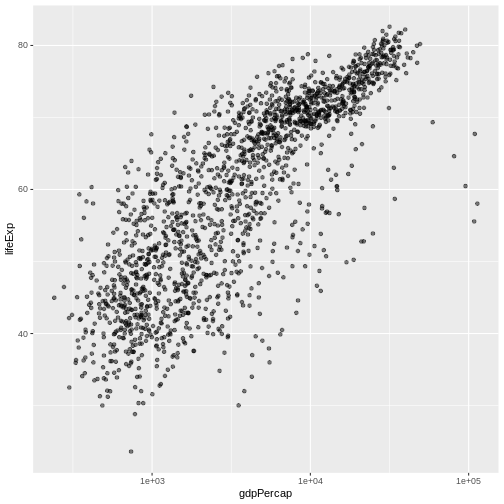
Image 1 of 1: ‘Scatterplot of GDP vs life expectancy showing logarithmic x-axis data spread’
Scatterplot of GDP vs life expectancy showing logarithmic x-axis data
spread
Figure 13
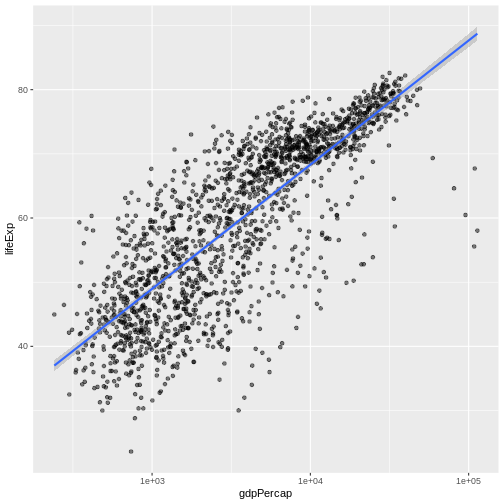
Image 1 of 1: ‘Scatter plot of life expectancy vs GDP per capita with a blue trend line summarising the relationship between variables, and gray shaded area indicating 95% confidence intervals for that trend line.’
Figure 14
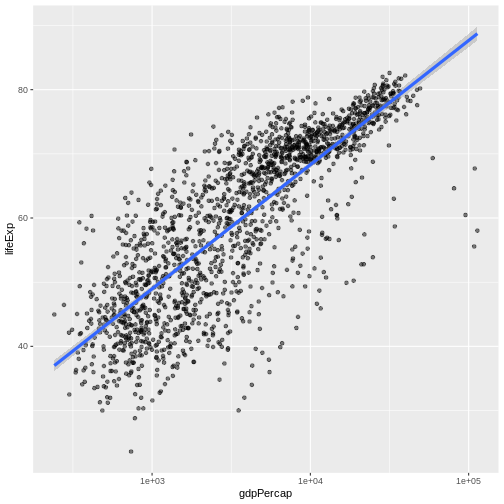
Image 1 of 1: ‘Scatter plot of life expectancy vs GDP per capita with a trend line summarising the relationship between variables. The blue trend line is slightly thicker than in the previous figure.’
Figure 15
Image 1 of 1: ‘Scatter plot of life expectancy vs GDP per capita with a trend line summarising the relationship between variables. The plot illustrates the possibilities for styling visualisations in ggplot2 with data points enlarged, coloured orange, and displayed without transparency.’
Figure 16
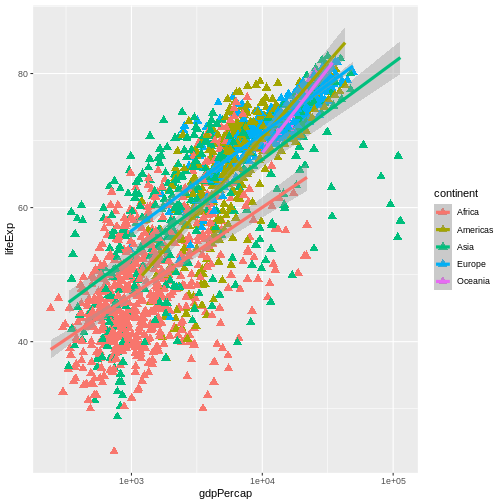
Image 1 of 1: ‘Scatter plot of life expectancy versus GDP per capita, with points shaped by a fixed symbol and colored by continent, plus continent-specific trend lines.’
Figure 17
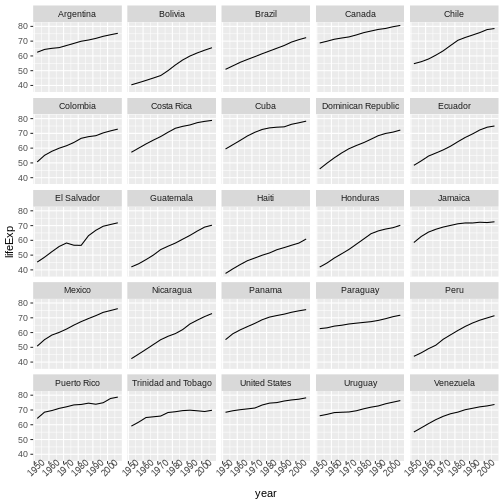
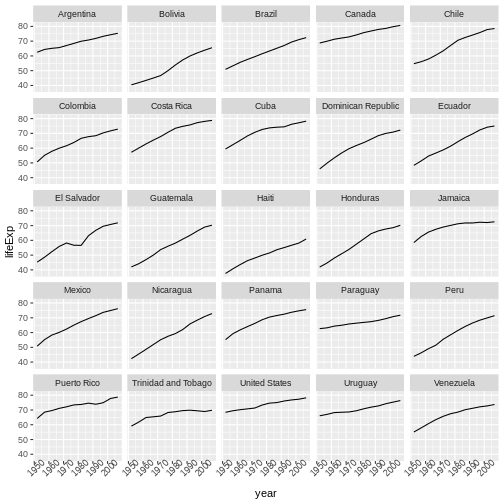
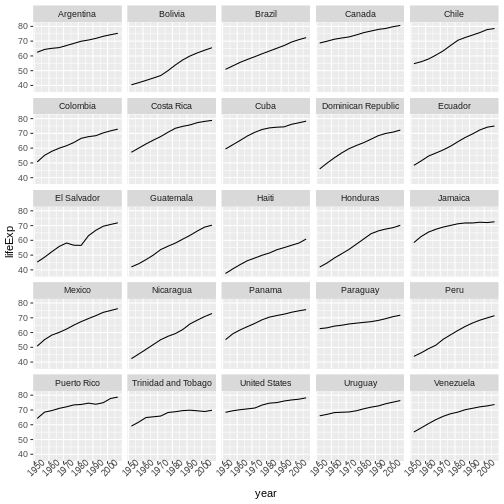
Image 1 of 1: ‘Small-multiple line plots of life expectancy over time, with a separate panel for each country in the Americas.’
Figure 18
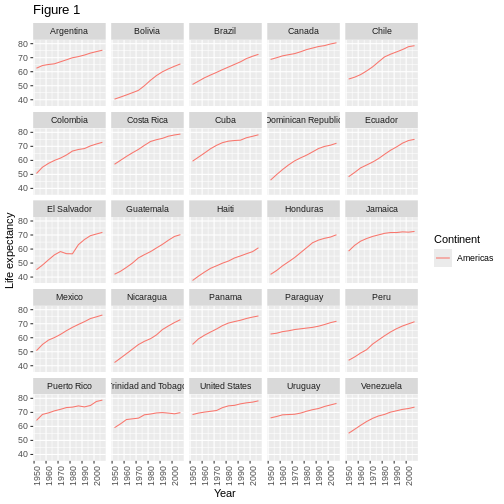
Image 1 of 1: ‘Small-multiple line plots of life expectancy over time, with a separate panel for each country and a continent color legend.’
Figure 19
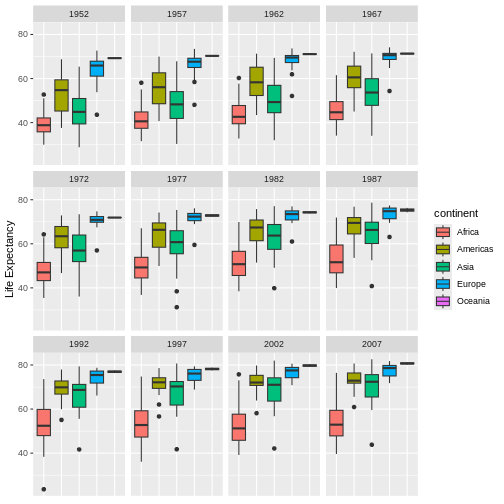
Image 1 of 1: ‘Boxplots of life expectancy by continent, split into panels by year; x-axis labels are removed.’
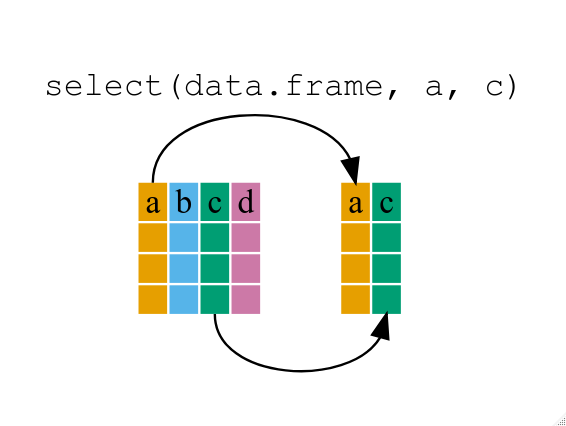
Image 1 of 1: ‘Diagram illustrating use of select function to select two columns of a data frame’
If we want to remove one column only from the gapminder
data, for example, removing the continent column.
Figure 2
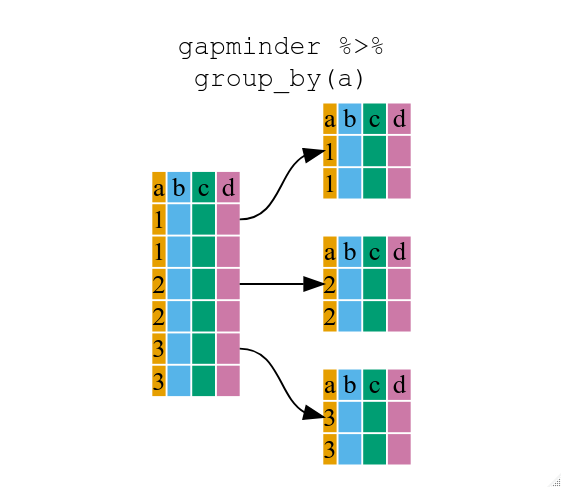
Image 1 of 1: ‘Diagram illustrating how the group by function oraganizes a data frame into groups’
Figure 3
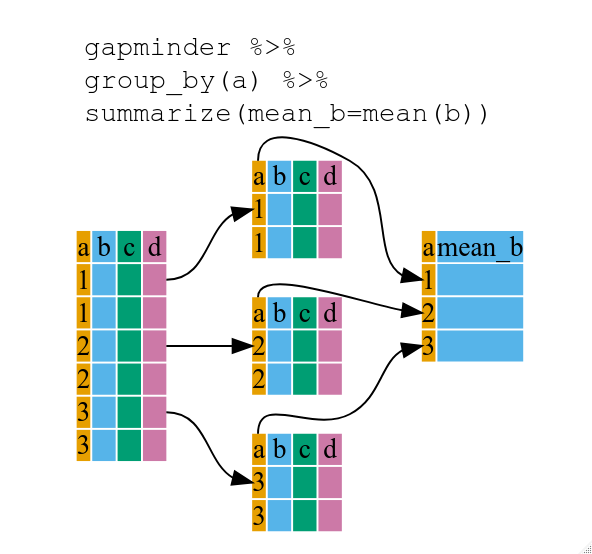
Image 1 of 1: ‘Diagram illustrating the use of group by and summarize together to create a new variable’
Figure 4
Image 1 of 1: ‘Small-multiple line plots of life expectancy over time, with a separate panel for each country in the Americas.’
Figure 5
Image 1 of 1: ‘Small-multiple line plots of life expectancy over time, with a separate panel for each country in the Americas, created with a dplyr pipe.’
Figure 6
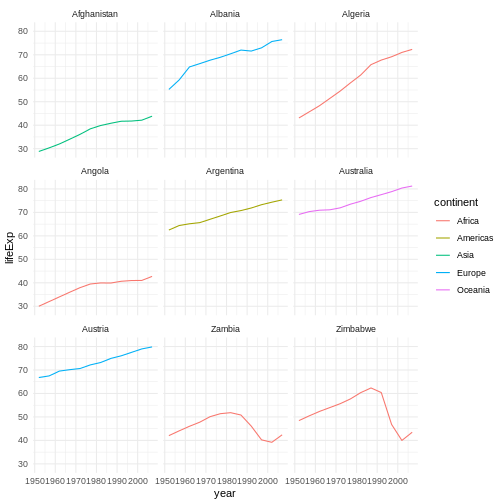
Image 1 of 1: ‘Small-multiple line plots of life expectancy over time for countries whose names start with A or Z, colored by continent.’
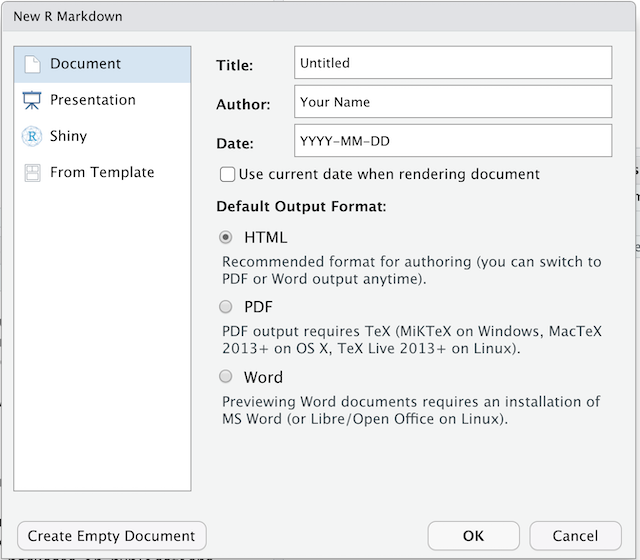
Image 1 of 1: ‘Screenshot of the New R Markdown file dialogue box in RStudio’
Figure 2
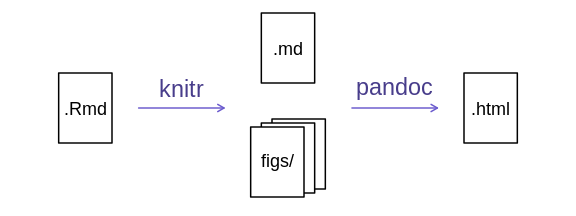
Image 1 of 1: ‘The process of converting an R Markdown document to an html webpage.’
Figure 3
Image 1 of 1: ‘Icon for turning on and off the visual editing mode in RStudio, which looks like a pair of compasses’
RStudio versions 1.4 and later include visual markdown editing mode.
In visual editing mode, markdown expressions (like
**bold words**) are transformed to the formatted appearance
(bold words) as you type. This mode also includes a
toolbar at the top with basic formatting buttons, similar to what you
might see in common word processing software programs. You can turn
visual editing on and off by pressing the
button in the top right corner of your R Markdown document.


 If we want to remove one column only from the

 button in the top right corner of your R Markdown document.